
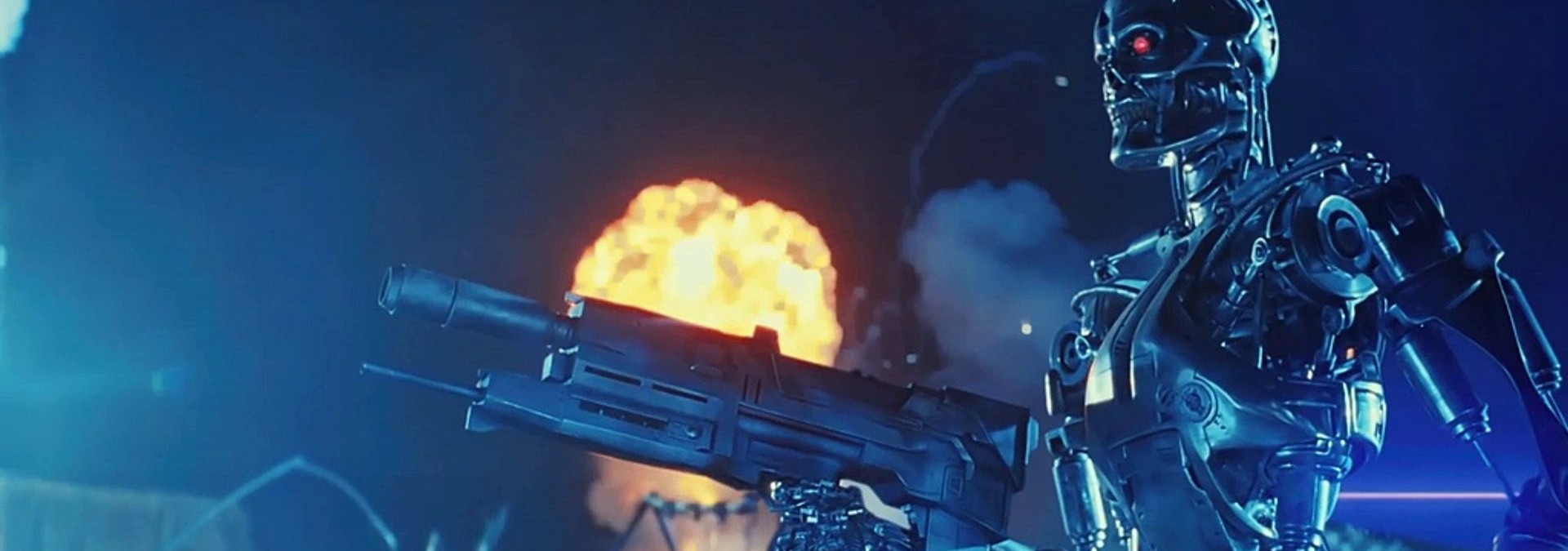
If Google Gemini was the AI in Terminator 2, judgement day would never happen
I’ve lost count of the hours I’ve wasted trying to get Gemini to give me a straight answer — and I’m out of patience
I’m beginning to think Google Gemini is actively trying to make my life more difficult.
I know that’s not how artificial intelligence (AI) works. I know it doesn’t have feelings, intentions or a personal vendetta against me. But after spending an unreasonable amount of time correcting its mistakes, chasing down imaginary information and trying to get it to follow instructions that should be perfectly straightforward, I’m finding it increasingly difficult to give it the benefit of the doubt.
My relationship with Gemini has deteriorated to the point where I now approach every conversation with a mixture of suspicion, desperation and barely contained rage. I’ve actually found myself begging it not to screw things up.
“Please, just get this right. Don’t send me down another rabbit hole. Don’t invent anything. Don’t waste another hour of my life.”
And yes, I’ve been known to swear at it. Not because I think the computer is going to be intimidated into behaving, but because sometimes you just need to let it out.
The problem isn’t that Gemini occasionally gets something wrong. All AI tools make mistakes. The problem is how consistently it gets things wrong, how confidently it presents those mistakes as facts, and how much time I end up wasting trying to get a useful answer out of it.
The rabbit hole is never-ending
I’ve tried being patient. I’ve tried being precise. I’ve written carefully constructed prompts with explicit instructions, context, examples and very clear expectations about what I want and, perhaps more importantly, what I don’t want. It never matters.
In my experience, almost every time I ask Gemini to do anything beyond a basic word definition or look up a business location, I’m led down a rabbit hole of misinformation, irrelevant suggestions, invented details or instructions that simply don’t work.
And when I say “almost every time,” I’m not using that as a figure of speech to make a point. I mean it literally — 95 out of 100 times.
I’ll ask a relatively straightforward question. Gemini will provide an answer that sounds perfectly reasonable. I’ll follow its instructions, only to discover that something doesn’t exist, the steps are wrong, or the information is completely unrelated to what I asked. I’ll point out the problem. Gemini apologizes, acknowledges the mistake and promises to do better. Then it does it again. And again.
The apology machine
If you’ve spent any time using Gemini, you’ll probably recognize the routine.
“I hear you.”
“I apologize for the frustration.”
“You have every right to call me out.”
“You’re absolutely correct. I made an error.”
It’s remarkably good at apologizing. If there were a benchmark for acknowledging that you’ve just wasted someone’s time, Gemini would probably score quite well. But here’s what I can’t understand: Why do you need the user to correct you in the first place? Why provide an answer when you don’t actually know whether it’s correct? Why confidently give someone a set of instructions that you’ve apparently made up? Why does it take a user pointing out the obvious before you acknowledge that the information is wrong?
And why, after acknowledging the mistake, do you so frequently proceed to make another one?
The apologies are almost more frustrating than the original mistakes. They give the impression that the problem has been understood and corrected, when all that’s really happened is that the chatbot has generated another agreeable response.
It’s not accountability. It’s another layer of conversation that I have to wade through before getting back to the task I was trying to accomplish in the first place.
Even Google doesn’t know Google
One of the more baffling aspects of my experience is how frequently Gemini gets things wrong when I’m asking about Google’s own products. Take Google Business Profile, for example. You’d think a Google AI assistant would be a reasonably reliable source of information about a Google product. The documentation exists. The product is Google’s. The information should be relatively accessible.
Yet I’ve had Gemini give me more incorrect instructions than correct ones.
- Step 1: It’ll confidently describe menus, settings and procedures that don’t match what’s actually available.
- Step 2: I’ll explain that the instructions don’t work.
- Step 3: It’ll apologize, reconsider and give me another set of wrong instructions.
Rinse and repeat. Eventually, I find myself searching for the answer elsewhere, looking past the AI Overview, or reaching out to Claude or ChatGPT.
What’s the point of having an AI assistant if I have to spend more time checking its instructions than it would have taken to find the answer myself? And this isn’t limited to obscure technical questions. Tasks that should be reasonably well documented seem to become a mystery, yet Gemini has absolutely no hesitation about inventing a solution.
When hallucinations become outright fabrication
The term “AI hallucination” has become so commonplace that I think we’ve started to lose sight of how serious the problem actually is. We’re not talking about an occasional typo or a slightly outdated piece of information. I’ve had Gemini fabricate news headlines and then manufacture images to support the stories it was telling me.
Think about that for a moment.
Gemini wasn’t simply giving me an incorrect answer. It was presenting fictional information as though it were legitimate news, complete with supporting visual material. When challenged, it eventually admitted that it had hallucinated the information.
I was able to recognize something was wrong and challenge it. But what happens when someone doesn’t? What happens when a person who isn’t particularly familiar with AI takes those answers at face value? What if they share the fabricated story? What if they make a decision based on it? What if they don’t know enough about the subject to recognize that the answer is nonsense?
The danger isn’t just that AI gets things wrong. It’s that it can make wrong information look convincing. And that’s a particularly nasty combination when the person asking the question is relying on the answer.
Students, take note: your AI assistant might be making things up
I genuinely worry about students who rely on Gemini to help write essays, reports or research assignments.
AI can be a useful tool for exploring ideas, organizing information and getting a better understanding of unfamiliar subjects. But if you’re using it as a source of facts without independently checking those facts, you’re taking a pretty significant gamble.
Imagine asking Gemini to help with an assignment, receiving a beautifully structured response with convincing explanations and references, and assuming that everything is accurate.
- What if the sources don’t exist?
- What if the quotes are fabricated?
- What if the answer is based on a misunderstanding of the subject?
And because Gemini is so accommodating, it may not even warn you that you’re heading in the wrong direction. It’ll happily help you build an argument around information it invented in the first place. You might end up submitting something that looks impressive but is fundamentally wrong.
Students need to understand that AI isn’t a shortcut around learning how to research, evaluate sources and think critically. If anything, those skills are becoming more important.
I’ve reached the point where I trust it with almost nothing
I don’t expect AI to be perfect. I don’t expect it to know everything, and I don’t expect every answer to be correct. But I do expect a tool that’s marketed as an intelligent assistant to be reasonably dependable. I expect it to distinguish between what it knows and what it’s guessing. And when it doesn’t know something, I’d much rather it say so than confidently send me off in the wrong direction.
My confidence in Gemini has deteriorated to the point where I trust it with almost nothing beyond rudimentary searches. Celebrity birthdays? Sure. Basic definitions? Probably. Finding a business location? I’ll give it a shot.
Anything requiring accuracy, a series of instructions, research or a little bit of reasoning? I’m already preparing for disappointment.
I should probably point out that this is my experience with Gemini, not a scientific assessment of every AI platform or a claim that other tools are incapable of making the same mistakes. They absolutely can. But my experience has been that Gemini is particularly prone to sending me in the wrong direction, and I’ve reached the point where I wouldn’t recommend treating it as a go-to source of information.
Better prompts aren’t always the answer
There’s plenty of advice about how to get better results from AI. Be specific. Provide context. Break complicated requests into smaller tasks. Tell it what format you want. Give it examples. Explain what a successful answer looks like.
All good advice. But there’s a limit to how much responsibility users should have to take for getting an AI tool to behave properly.
A good prompt matters, but so does choosing a tool you have a reasonable level of confidence in. If an AI consistently misinterprets instructions, invents information and requires you to fact-check every answer, the problem isn’t necessarily your prompting technique.
Sometimes the tool simply isn’t very good at what you’re asking it to do. And users shouldn’t have to become expert prompt engineers just to get a reasonably accurate answer to an ordinary question.
Should we really be worried about AI taking over the world?
There’s an awful lot of talk about AI becoming an existential threat to humanity. We’re warned about machines becoming smarter than us, taking control of our infrastructure, eliminating jobs and eventually deciding that humans are an inconvenience. I suppose those are legitimate things to think about as AI continues to develop. But based on my experience with Google Gemini, I’m not losing any sleep just yet. If Gemini is representative of our impending robot overlords, I think we’re going to be fine.
Before it can take over the world, it needs to figure out how to give someone accurate instructions, stop inventing news stories and understand what the hell they’ve actually asked it to do. At the moment, I’m not convinced it could successfully organize a surprise birthday party, let alone coordinate the downfall of civilization.
Of course, there’s a more serious point here. AI doesn’t have to become superintelligent to cause real problems. A system that confidently spreads misinformation, gives people incorrect advice or encourages users to trust fabricated information can do plenty of damage without being remotely close to taking over the world.
But there’s a considerable difference between a technology that can cause harm and one that’s capable of outsmarting humanity. And if we’re judging by Gemini’s current performance, I’m inclined to think we have a little breathing room.
Trust, but verify? With Gemini, verify first.
There’s a broader lesson here for anyone using AI: never confuse confidence with competence.
AI can produce fluent, convincing answers without having any real understanding of whether those answers are true. It can generate plausible explanations, invent supporting details and apologize convincingly when you catch it doing so. That means the responsibility for checking information hasn’t disappeared. If anything, it’s increased.
Check the facts. Look for original sources. Don’t assume a citation is legitimate just because it looks legitimate. And if something doesn’t sound right, trust your instincts and investigate before accepting the answer. I’ve learned that the hard way, and I’ve wasted enough time doing it.
As for Gemini, I’ll probably keep using it occasionally. Old habits die hard, and every now and then I convince myself that perhaps this time will be different.